


Building an AI copilot for preconstruction, 0 → 1.
ROLE
TIMELINE
8 Weeks
Sep - Dec 2025
TEAM
1 PM
2 Developers
TOOLS/SKILLS
User Research
Branding
Design Systems
01
Summary
The architecture industry is lagging behind the velocity of AI integrations in other verticals. As part of a rigorous 8-week product incubator at USC’s LavaLab, I worked with three other co-founders to ship a product that streamlines the preconstruction phase—one of the most consequential stages of a project.
02
Problem Space
Humanizing design is essential.
For four years, I studied architectural design, participating in competitions by the AIA. Within conversations I had with architecture professionals, I saw a through-line: how outdated, redundant and time-sensitive projects are.

Specifically, project managers at different construction firms go through a bidding process to win a project. This timeframe is relatively short, where an accurate bid estimate is calculated through material and labor estimations, called takeoff.
03
Solution
Pillar is an AI copilot for preconstruction, customizable for any workflow.
Takeoff
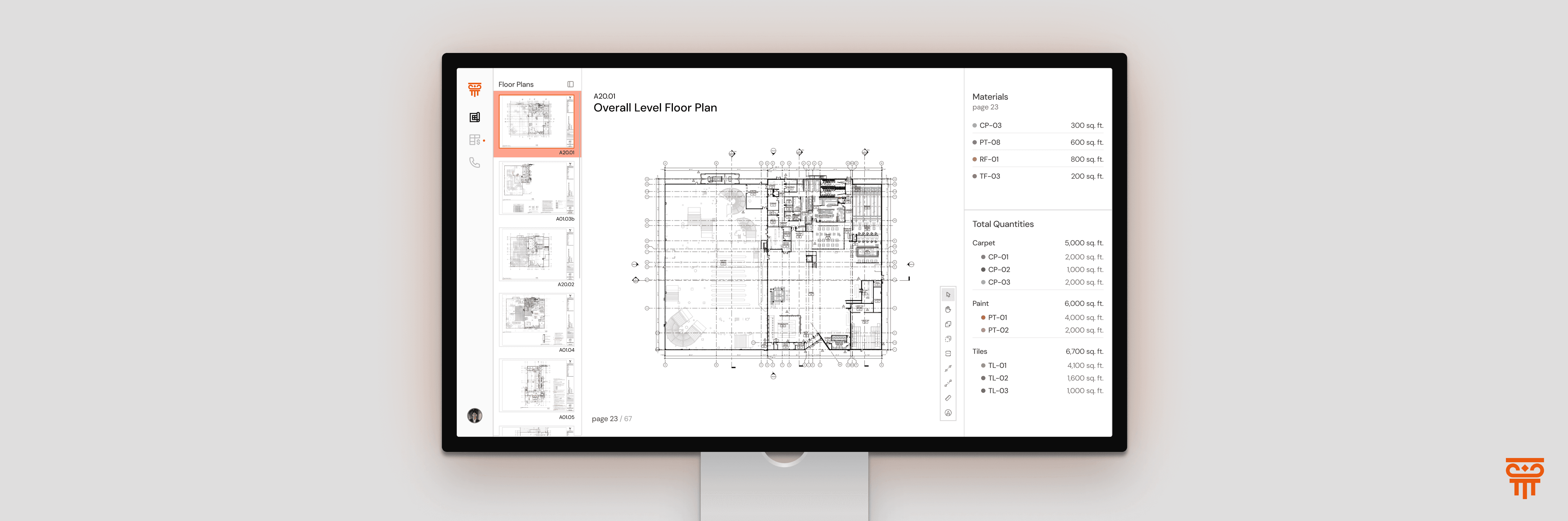
Project managers upload the floor plans that require area tracing. Pillar quantifies the total amount of different materials automatically, which can be edited.
Sourcing
Based on local vendors and existing working relationships, Pillar automates outreach through emails and calls, providing real-time quotes.
Customizability
Some construction firms outsource work such as takeoff. Pillar provides a tailored solution to match different enterprise needs.
04
Problem Validation
The preconstruction phase is short and high-stakes.
Each conversation with a professional pointed us to the direction of project managers, and just how thin they get spread during the short, high-stakes period before construction.
Timeline
Bottleneck
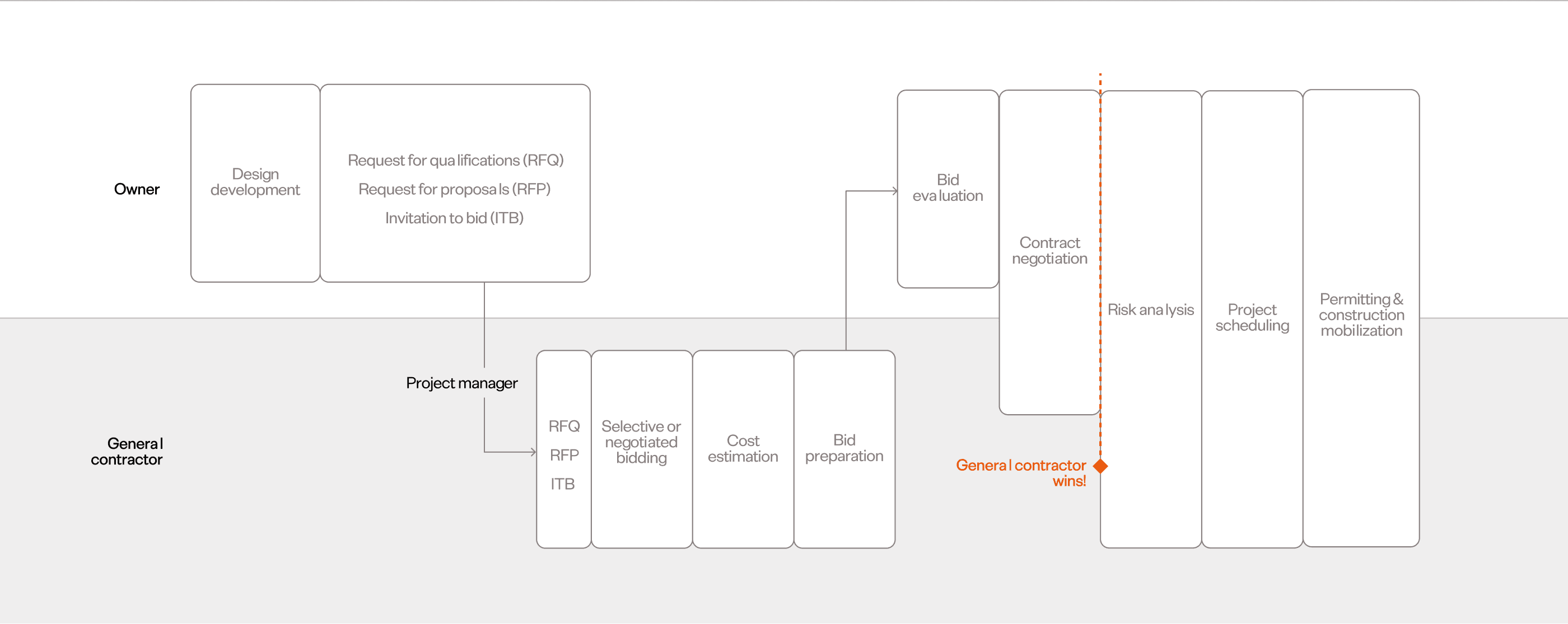
FIG 01. A high-level preconstruction timeline of a building owner/general contractor relationship, with the project manager in between.
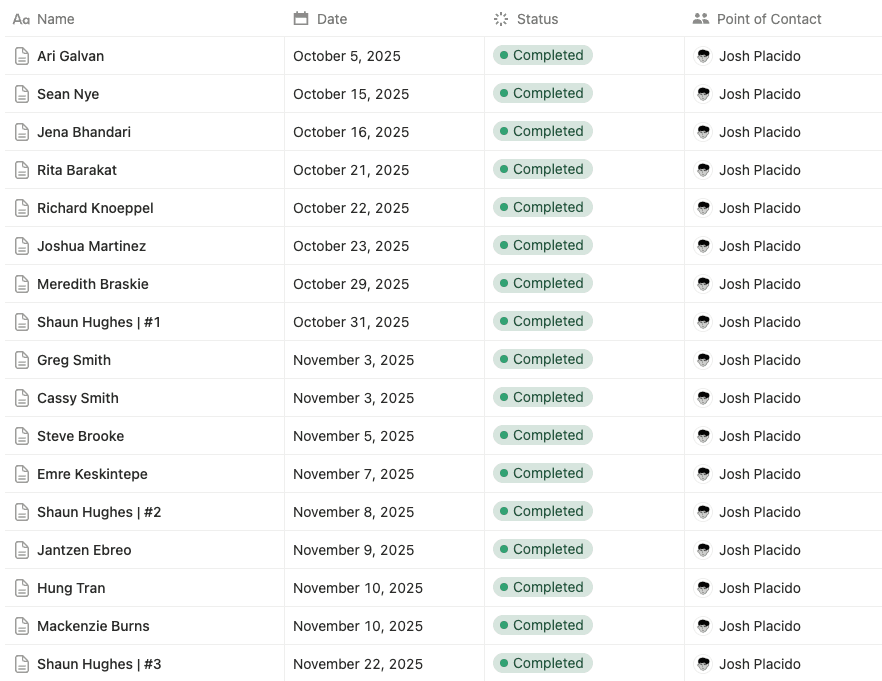
FIG 04. A snapshot of some of the 25+ user interviews I led — covering product validation, feature iteration and workflow optimization.
“
Richard Knoeppel
Architecture Teacher (30+ years experience)
It’s not going to take away jobs. What it should do is streamline productivity. At the end of the day, time is money.
“
Hung Tran
2023 AIA Young Architect Award Recipient
I don’t need AI to make the schedule for me — I just want it to show me what changed. Highlight the shifts, flag the red flags, and let me focus on the conversation.
Prices are constantly fluctuating.
A general contractor's network = net worth.
Virtually all general contractors rely on maintaining existing client/contractor relationships for discounts on materials and labor.
Costs depend on season and amount.
Depending on the season, certain materials and labor are more in-demand. Materials bought in bulk cost less, and labor costs vary on project type and size.
Workflows vary greatly.
Cost estimation is a balancing act.
On average, project managers must balance the needs of at least 25 stakeholders (FIG 02).
There is no one-size-fits-all.
The responsibilities of general contractors vary by the company's size. This may include offshoring work (like takeoffs) to subcontractors.
HMW customize a solution that allows different-sized firms to quickly and accurately cost estimate?
05
Design Process
🚧
06
Takeaways
Work openly in your design process.
As user feedback reshaped our roadmap, our sprint timelines fluctuated often. Shipping effectively requires alignment with developers to continuously reprioritize features.
Curiosity brings clarity.
The architecture industry is complex and resistant to AI. To build something meaningful, I had to constantly challenge my assumptions about the market. Leading user interviews with probing questions, combined with deep market research, informed my design decisions to fit real user needs.
Fail fast.
We circled around several different problem spaces (and even industries!) — knowing when to pivot came from honest re-evaluation and rigorous questioning.